Daily Water Intake Calculator
Step 1 — Basal Metabolic Rate (BMR)
Mifflin-St Jeor: kcal/dayStep 2 — Total Daily Energy Expenditure (TDEE)
BMR × activity = kcal/dayStep 3 — Total water needs
TDEE × 1 ml/kcal ≈ ml ( L)Step 4 — What to actually drink
About 80% comes from drinks (20% from food) → L per dayWhat this means
Estimate only, not medical advice. About 20% of your water comes from food. Drink to thirst and increase in heat, illness, or during exercise. Ask a doctor about special needs (pregnancy, kidney or heart conditions).
Staying hydrated sounds simple.
But knowing how much water you actually need is not.
The truth is, daily water needs vary from person to person.
Your body weight, activity level, and even climate all matter.
Water Intake Calculator helps you figure out exactly how much water you should drink per day based on your body and lifestyle.
No guessing.
No outdated rules like “8 glasses a day.”
Just a clear, personalized daily water intake target you can actually follow.
Use this calculator if you want to:
- Improve hydration
- Support weight loss
- Boost energy and focus
- Avoid drinking too little or too much water
How Much Water Should You Drink Per Day?
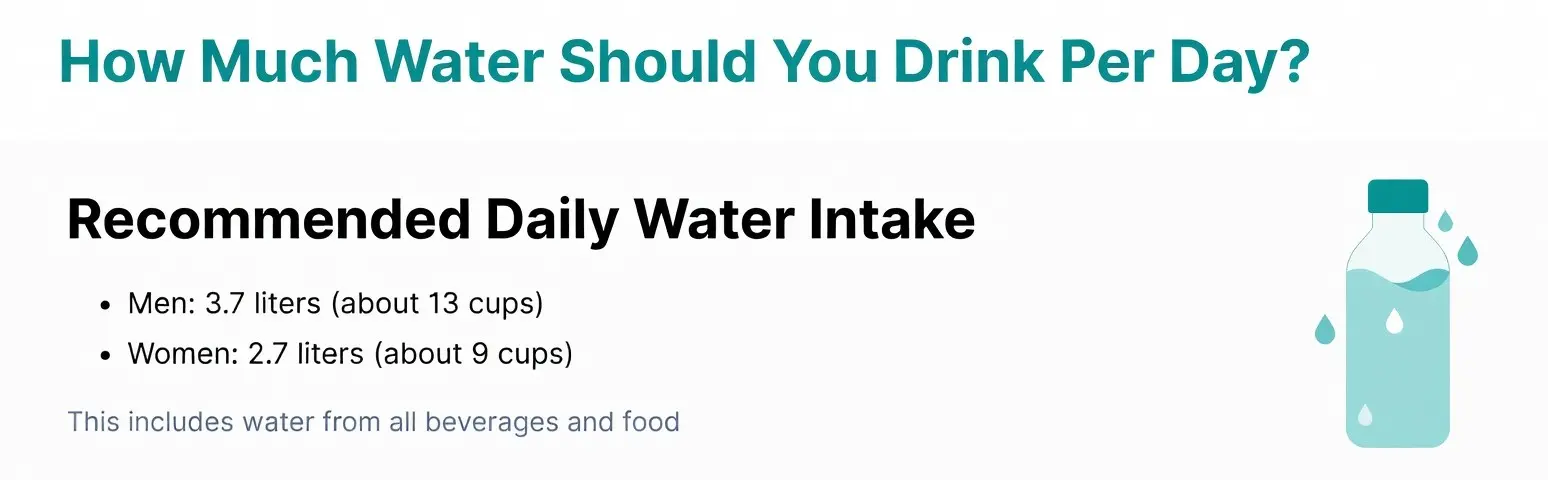
There is no single answer that works for everyone.
You may have heard the rule “8 glasses a day.”
That advice is outdated.
Your daily water needs depend on your body and your routine.
Some people feel fine on less.
Others need much more.
What actually affects how much water you need?
Several factors play a role.
- Body weight
Heavier people generally need more water than lighter people. - Physical activity
Exercise increases fluid loss through sweat.
The more you move, the more water you need. - Weather and climate
Hot or humid conditions raise your water requirements, even if you are not exercising. - Diet
High-protein, salty, or high-fiber diets increase water needs. - Health and lifestyle
Illness, medications, and pregnancy can also affect hydration needs.
Why guessing your water intake does not work
Drinking too little water can lead to:
- Fatigue
- Headaches
- Poor focus
- Reduced physical performance
Drinking too much can also be a problem.
That is why calculating your intake based on real factors matters.
A better way to know how much water to drink
Instead of following generic rules, use a daily water intake calculator.
It estimates how much water you should drink per day based on:
- Your weight
- Your activity level
- Your environment
- Your goals
This gives you a personalized target, not a random number.
Think of it as a smart hydration baseline you can adjust as needed.
How to Calculate Daily Water Intake
Calculating your daily water intake is simpler than most people think.
You do not need complex formulas.
You just need the right inputs.
Step 1: Start with your body weight
Body weight is the most important factor.
A common guideline is to drink water based on how much you weigh.
Larger bodies require more fluids to function properly.
This is why weight-based calculators are more accurate than fixed rules.
Step 2: Adjust for physical activity
Exercise changes everything.
When you sweat, your body loses water quickly.
Even light activity can increase daily water needs.
If you work out regularly or have a physically demanding job, you need extra water to stay hydrated.
Step 3: Consider your environment
Climate matters more than most people realize.
Hot or humid weather increases fluid loss.
So does spending time outdoors or in heated indoor spaces.
On warm days, your water intake should be higher than usual.
Step 4: Factor in your goal
Your goal affects hydration needs.
If your focus is weight loss, proper hydration helps:
- Control appetite
- Support metabolism
- Improve workout performance
This does not mean drinking extreme amounts of water.
It means drinking the right amount consistently.
Why a calculator works better than manual calculation
Manually estimating water intake often leads to mistakes.
A daily water intake calculator combines all these factors into one result:
- Weight
- Activity
- Climate
- Goal
This gives you a realistic number you can follow every day.
Use it as a baseline.
Then listen to your body and adjust when needed.
Water Intake by Weight
Your body weight is the biggest factor in determining how much water you need.
This is why weight-based recommendations are more reliable than fixed rules.
A 50 kg person and a 90 kg person do not have the same hydration needs.
Their bodies simply work differently. People with higher lean body mass often need more water to stay properly hydrated.
Why body weight matters for hydration
Water supports:
- Blood volume
- Digestion
- Temperature control
- Nutrient transport
Larger bodies need more fluid to keep these systems running smoothly.
That is why many experts base water intake on body weight instead of age or gender alone.
General water intake by weight guideline
A commonly used approach is to drink a specific amount of water per kilogram or pound of body weight.
This gives you:
- A realistic daily target
- A number that scales with your size
- A better baseline than guessing
Your water intake by weight result is not a strict limit.
It is a starting point you can adjust based on activity and climate.
Example of water intake by weight
If two people follow the same routine but have different weights, their water needs will still differ.
The heavier person will usually need more water throughout the day to stay properly hydrated.
This is exactly why a water intake calculator works better than generic advice.
When weight alone is not enough
Body weight is important, but it is not the whole story.
Your body fat percentage can also influence how much water your body needs each day, since lean tissue holds more water than fat.
You may need more water if you:
- Exercise frequently
- Live in a hot climate
- Sweat heavily
- Are trying to lose weight
That is why this calculator combines weight with other factors to give a more accurate daily intake.
How Many Oz of Water Should I Drink?
Many people track water in ounces instead of liters.
That is especially common if you use:
- Water bottles labeled in oz
- Cups or glasses with oz markings
- Fitness apps based on US units
If you have ever asked, “how many oz of water should I drink,” you are not alone.
Why ounces are used for water intake
Ounces make daily water intake easier to visualize.
Instead of thinking in liters, you can think in:
- Number of bottles
- Number of glasses
- Refills per day
This makes it easier to stay consistent.
Converting your daily water intake to ounces
Your daily water intake calculator result can be shown in ounces.
This helps you:
- Track intake throughout the day
- Set reminders
- Plan water breaks
For example, if your daily target equals several standard water bottles, you know exactly how many you need to finish.
How to track water intake in ounces
Simple methods work best:
- Use the same bottle all day
- Refill it as needed
- Count refills instead of small sips
This reduces guesswork and helps you meet your hydration goal without overthinking it.
Ounces vs liters: which is better?
Neither is better.
They are just different units.
What matters is consistency.
Choose the unit that fits your habits and stick with it.
Your hydration level will improve either way.
How Much Water to Drink to Lose Weight
Water alone does not cause weight loss.
But drinking the right amount can support it.
Proper hydration helps your body work better while you diet or exercise.
How water supports weight loss
Drinking enough water can:
- Reduce appetite and mindless snacking
- Help you feel full before meals
- Support metabolism and digestion
- Improve workout performance
When you are slightly dehydrated, your body often confuses thirst with hunger.
That leads to extra calories.
How much water should you drink for weight loss?
There is no magic number.
Your water needs for weight loss depend on:
- Body weight
- Daily activity
- Exercise intensity
- Climate
It gives you a personalized daily target instead of a generic recommendation.
When to drink water for better results
Timing matters.
Simple habits that help:
- Drink water before meals
- Sip water during workouts
- Rehydrate after exercise
- Spread intake evenly throughout the day
Avoid drinking very large amounts at once.
Consistency works better than extremes.
Can drinking too much water help you lose weight faster?
No.
Overhydration does not burn extra fat.
It can cause discomfort and dilute important electrolytes.
The goal is balanced hydration, not excess.
Use your daily water intake result as a guide and adjust based on how your body responds.
Signs You Are Not Drinking Enough Water
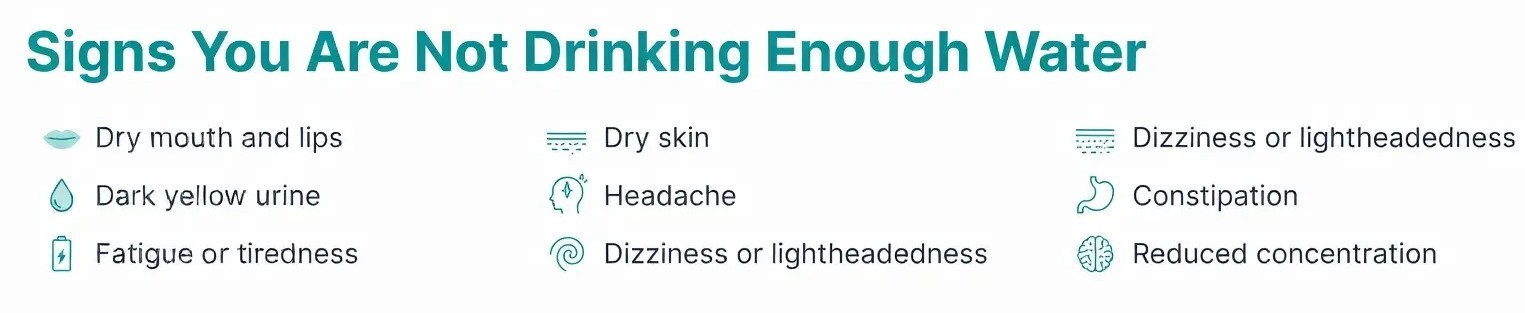
Your body gives signals when you are dehydrated.
Most people ignore them.
Mild dehydration is common, even in healthy adults.
Common signs of low water intake
You may not be drinking enough water if you notice:
- Frequent headaches
- Low energy or fatigue
- Dry mouth or lips
- Dizziness
- Difficulty concentrating
These signs often appear before you feel very thirsty.
Urine color as a hydration check
One of the easiest ways to check hydration is urine color.
- Pale yellow usually means good hydration
- Dark yellow often means you need more water
This is not a medical test.
But it is a useful daily indicator.
Performance signs of dehydration
Lack of water can affect performance.
You may experience:
- Reduced workout endurance
- Muscle cramps
- Slower recovery
- Poor heat tolerance
Even small drops in hydration can impact how your body feels and performs.
Why relying on thirst alone is not enough
Thirst is a late signal.
By the time you feel very thirsty, you may already be mildly dehydrated.
That is why using a daily water intake calculator helps.
It gives you a target so you do not have to rely on guesswork.
Try These Calculators Next
Frequently Asked Questions (FAQs)
How much water should you drink a day?
There is no single number that works for everyone.
Daily water intake depends on your body weight, activity level, and environment.
A water intake calculator gives a more accurate daily target than fixed rules like 8 glasses a day.
How much water should you drink to lose weight?
Drinking enough water can support weight loss, but it does not replace diet or exercise.
Most people benefit from staying well hydrated throughout the day, especially before meals and workouts.
A weight-based water intake calculator helps you find a realistic daily target for weight loss.
How many ounces of water should I drink?
Your daily water intake in ounces depends on your personal needs.
Many people find it easier to track hydration in ounces using bottles or cups.
Once you know your daily target, you can divide it into refills throughout the day.
Does coffee count toward daily water intake?
Yes, coffee does count toward your daily water intake.
While caffeine has a mild diuretic effect, the fluid in coffee still contributes to hydration.
That said, plain water should remain your main source of fluids.